
Rabbit and Guinea Pig Care – Medicine, Surgery, Dentistry
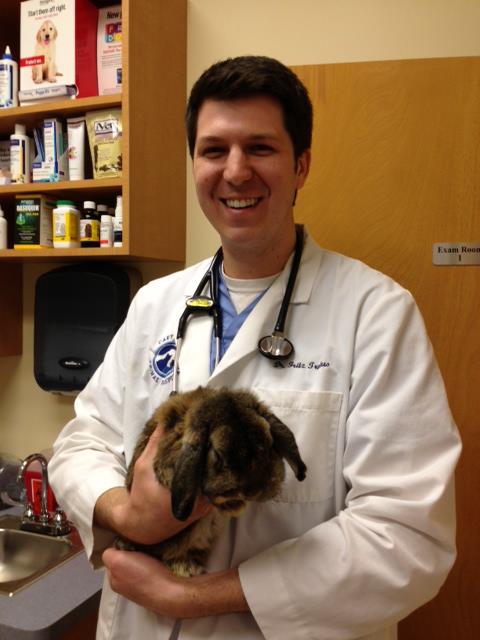
Rabbits and guinea pigs (cavies) are not small dogs or cats. They are unique animals with special needs especially when it comes to their medical care. It is vital to select a veterinarian that is experienced in treating rabbits and guinea pigs when your pet needs care. An experienced veterinarian must be able to properly handle them for a complete physical examination, know what medications can safely be used and which can not, be aware of common diseases and their treatments, and other unique aspects of their care.
Dr. Fritz Trybus has many years experience in raising both rabbits and guinea pigs, as well as providing them veterinary care. He is a board member of the Rabbit and Cavy (Guinea Pig) Health Committee with the American Rabbit Breeders Association (www.arba.net) a international leading organization for rabbits and guinea pigs. He is also a licensed ARBA Rabbit Judge and Rabbit and Cavy Registrar.
Both Dr. Fritz Trybus and Dr. Heidi Quinn are available to provide routine physical examinations and consultations on husbandry and diet as well as medical work ups for illnesses.Some common illness we treat are: anorexia/not eating due to GI Stasis or fur block, head tilt/wry neck, sneezing/snuffles, eye infections, ear infections, bladder infections/stones, diarrhea, cancer, and others.
In addition to medical treatment, we provide surgery and dental care services. Our doctors and staff are experienced in anesthesia for both rabbits and guinea pigs to help minimize the risks with these typically higher risk patients. Feel free to contact our office to schedule an appointment for your rabbit or guinea pig.
Recommended Pet Vaccines
Which vaccines should your pet have? “Core” vaccines are those recommended—and possibly mandated by law—for most pets.
Core vaccines include:
- Rabies (dogs and cats)
- DA2PPV – Distemper, Hepatitis, Adenovirus 2, Parvo and Parainfluenza (dogs)
- FVRCP – Feline Viral Rhinotracheitis, Calicivirus and Panleukopenia (cats)
Additional Information
Puppies and kittens usually start their vaccine series between 6 to 8 weeks of age. The specific schedule for pet vaccinations will depend on the type of vaccine and our veterinarian’s recommendations.
The frequency of vaccines will depend on a number of factors, including the type of pet you have. For example, you should make sure that your dog completes the initial series of core vaccines administered at the puppy stage, as well as booster shots at one year of age. Following the one-year boosters, it’s recommended that the distemper, adenovirus, and parvovirus core vaccines be administered once every three years.
Additionally, some vaccination schedules are regulated by local and state law. States and municipalities govern how often rabies boosters are administered.
Non-core vaccines should be administered whenever the risk of disease is significant. For example, the kennel cough vaccine should be administered once every year or once every six months. If your pet boards a lot or goes to doggie daycare, you may consider vaccinating for kennel cough every six months.
Vaccinations play a crucial role in safeguarding your pet’s health by stimulating their immune system to fight off potential infections. By administering routine vaccinations, we can prevent serious and potentially life-threatening diseases such as rabies, distemper, parvovirus, and more. Not only do vaccinations protect your pet, but they also contribute to the overall health and well-being of the entire community by preventing the spread of contagious diseases.
At Cary Grove Animal Hospital, we take a personalized approach to animal vaccinations, tailoring our recommendations to meet the unique needs and lifestyle of each pet. Our team of experienced veterinarians will work closely with you to develop a vaccination schedule that aligns with your pet’s age, breed, health status, and risk factors. We prioritize the safety and comfort of your pet throughout the vaccination process, ensuring a stress-free experience for both you and your furry companion.
Vaccinations can be administered during routine wellness exams. Vaccine reactions are generally nonexistent. However, if your pet does have a reaction which may include swelling or local pain, call your veterinarian immediately. Most reactions will occur soon after the vaccination.
Although some of your pet’s vaccines are administered every three years, this does not mean you should skip your pet’s yearly wellness exam. Routine wellness exams provide the opportunity for your veterinarian to detect and prevent problems at an early stage.
To schedule a routine wellness exam for your pet, or to make an appointment for pet vaccinations in Cary Grove, contact us at 847-462-8387.